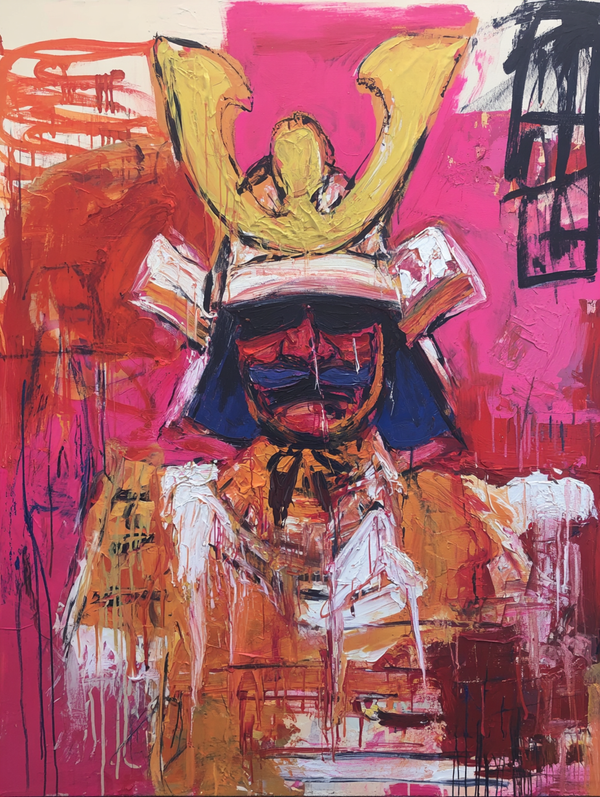
Ask anyone about Miyamoto Musashi and they'll tell you the same thing: undefeated in over 60 duels. It's an extraordinary record — one that has made him a legend for four centuries. But if that's where the story ends for you, you're missing the most fascinating part.
Read the book Musashi left behind in the final years of his life — The Book of Five Rings — and you find something that goes far beyond sword technique. It's the philosophy of a man who spent his entire life staring death in the face, and somehow arrived at a profound clarity about how to live.
The most famous duel in history — and its surprising truth
The 1612 duel on Ganryūjima island between Musashi and his great rival Sasaki Kojirō is the stuff of legend. But hidden within that story is a detail that reveals something deeper than swordsmanship.
Historical episode
Musashi arrived dramatically late to the appointed duel. Some accounts say he slept through the morning on his boat. He appeared carrying not a sword, but a wooden blade he had carved from a spare oar during the crossing. Kojirō, already furious at being kept waiting, drew his long sword and threw his scabbard into the sea in a rage. Musashi, it is said, observed this calmly and remarked: "The duel is already decided."
What did Kojirō's discarded scabbard reveal? That he had allowed his emotions — his anger, his humiliation — to take control. He had already surrendered the most important ground: his own mind. Meanwhile, Musashi stood perfectly composed. The outcome was settled before a single blow was struck, and Musashi knew it.
----
Bushido perspective: A disordered mind is the greatest weakness
In Bushido, emotional mastery was considered equal — or superior — to physical technique. Kojirō's rage illustrates how even the most refined skill becomes fragile once the mind is disturbed. This is why Musashi wrote in The Book of Five Rings(五輪書): "The mind of the warrior must be like still water." Not passive — but unruffled, clear, and ready.
----
What the greatest swordsman took up after 60
Here is a side of Musashi most people never encounter: in his later years, he became a serious artist.
Several of Musashi's ink paintings are today designated National Treasures or Important Cultural Properties in Japan. Works such as Shrike on a Dead Branch and Cormorant are regarded as masterpieces by serious art scholars — not as curiosities from a famous swordsman, but as works of genuine artistic vision. So why did a man who had dedicated his life to the blade turn to painting?
A late-life confession
After the age of 60, Musashi retreated to a mountain cave in Kumamoto — Reigandō — and there began writing what would become his final testament, The Book of Five Rings. In its opening pages, he writes something remarkable: "Reflecting on my past victories, I realize they were not the result of mastering the true Way. Perhaps I was gifted, perhaps fortunate. But I had not yet arrived."
Let that sink in. The man who went undefeated his entire life was, at 60, admitting that he hadn't truly understood what he was doing when he was winning. His decades of victories were real — but they had come from raw talent and instinct, not from genuine mastery of the path he now saw clearly.
Bushido perspective: The "Way" is a lifelong pursuit — not a destination
One of Bushido's deepest concepts is dō (道) — the Way. It is not a goal to reach but a direction to walk, without end. When Musashi turned to painting, he wasn't escaping swordsmanship. He was recognizing that the same pursuit of truth and mastery that drove his sword also lived in art, in writing, in every craft done with full attention. For the samurai, the obligation to keep refining oneself until death was not a burden — it was the very definition of a life well lived.
What The Book of Five Rings asks of us today
Musashi organized his philosophy across five scrolls, each named for a classical element. But this is no manual of sword techniques. It's a map of the mind.
Train with 1,000 days of practice to forge yourself. Train with 10,000 days to refine yourself. Reflect on this deeply.
— Miyamoto Musashi, The Book of Five Rings
One thousand days — roughly three years — to be "forged." Ten thousand days — nearly three decades — to be "refined." What Musashi is saying is not discouraging. It is liberating: the moment you believe you have arrived, the Way ends. Stay on it, and it never does.
It was never about the sword
If you've stayed with this article, you've probably already felt it: what made Musashi unbeatable wasn't technique. It was a way of being in the world — calm under pressure, relentlessly curious, humble before the enormity of mastery, and committed to growth until his final breath.
These are the precise virtues that Bushido encodes. Musashi didn't follow a code — he became one. And perhaps the most striking thing of all is that four centuries later, none of this feels like ancient history. It feels like advice for this morning.
If this resonated with you
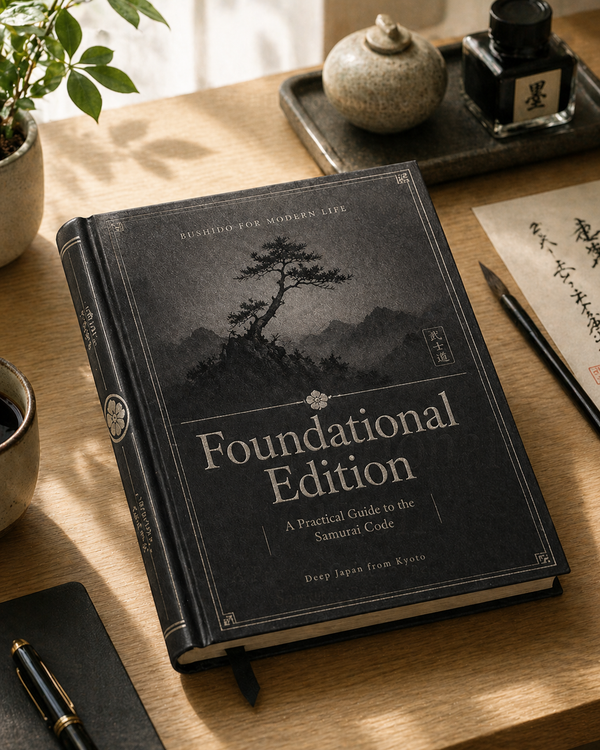
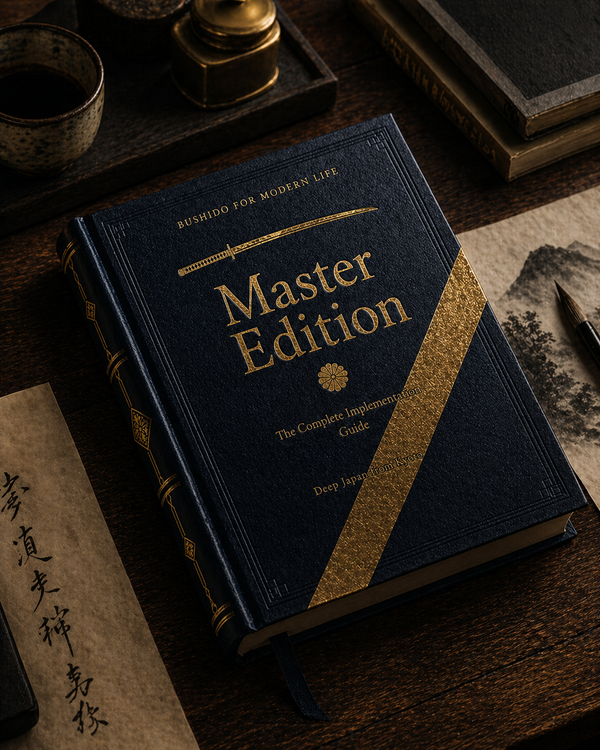
We've put together an e-book that traces the Bushido code through stories like this one — connecting the lives of Japan's most iconic samurai to timeless principles you can actually use. It reads less like a history lesson and more like a conversation across centuries.
Bushido for Modern Life(Complete Edition)| The Full Two-Book System — Framework + Implementation